
Lincoln Electric Excalibur is the premium production electrode line built for contractors, fabricators, and maintenance shops that demand consistent arc performance, low-hydrogen deposits, and the logistical reliability of moisture-resistant (MR) packaging. Across more than 130 SKUs, the Excalibur name covers carbon steel, stainless, high-strength low-alloy, chrome-moly, and precipitation-hardening grades — manufactured to meet or exceed the applicable AWS filler-metal specification. If Lincoln Electric makes it in a stick electrode, there is an Excalibur version of it for code-governed and production welding.
-

Lincoln Excalibur 7028 Stick SMAW Welding Rod
From $338.48$409.00Unit price /Unavailable
Lincoln Excalibur 7018-A1 MR Stick SMAW Welding Rod
From $187.62$222.00Unit price /Unavailable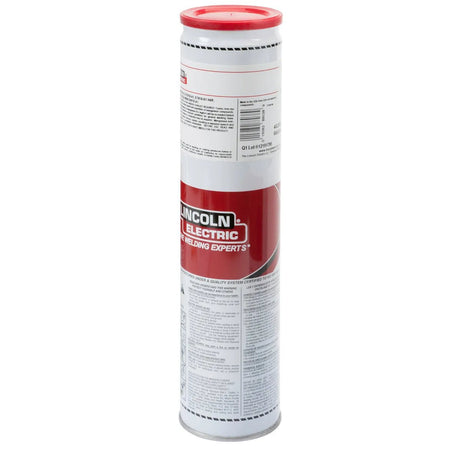
Lincoln Excalibur 8018-B2 MR E8018-C3 Stick Welding Rod
From $180.54$185.75Unit price /Unavailable
Lincoln Excalibur 316L Stick SMAW Welding Rod
From $168.56$180.96Unit price /Unavailable
Lincoln E8018-C1 (Excalibur 8018-C1 MR x 14 SMAW Welding Rod)
From $268.00$312.60Unit price /Unavailable
Lincoln E9018M (Excalibur 9018M MR x 14 SMAW Welding Rod)
From $242.52$282.00Unit price /Unavailable
Lincoln Excalibur 7018 MR Stick SMAW Welding Rod
From $167.40$204.90Unit price /Unavailable
Lincoln Excalibur 8018-C3 MR 3/32 x 14 in SMAW Welding Rod
From $197.28$241.50Unit price /Unavailable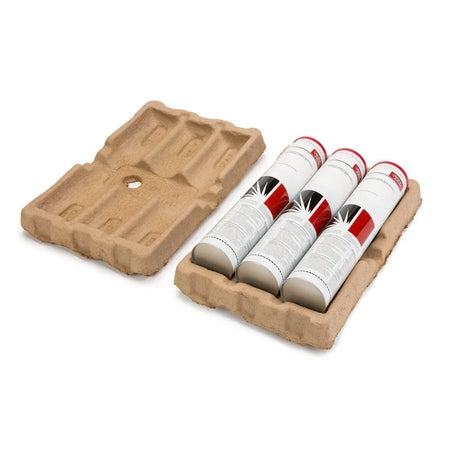
Lincoln Excalibur 7018 XMR 3/32 x 14 in SMAW Welding Rod
From $188.25$226.50Unit price /Unavailable
Lincoln Excalibur 7018-1 MR 3/32 x 14 in SMAW Welding Rod
From $156.96$192.24Unit price /Unavailable
Lincoln Excalibur 309L Stick SMAW Welding Rod
From $122.16$191.76Unit price /Unavailable
Lincoln Excalibur 308L Stick SMAW Welding Rod
From $118.15$131.04Unit price /Unavailable

Lincoln Excalibur 410-16 Stainless Stick SMAW Welding Rod
From $131.52$145.80Unit price /Unavailable
Lincoln Excalibur 630-16 Stick SMAW Welding Rod
From $151.97$168.72Unit price /Unavailable
Lincoln Excalibur 308H Stick SMAW Welding Rod
From $162.72$180.20Unit price /Unavailable

Lincoln Excalibur 2209 Stick SMAW Welding Rod
From $172.32$190.88Unit price /Unavailable
Lincoln Excalibur 9018-B3 MR E9018-M Stick Welding Rod
From $194.32$198.50Unit price /Unavailable
Lincoln Excalibur 10018-D2 MR E10018-D2 Stick Welding Rod
From $196.93$235.50Unit price /Unavailable

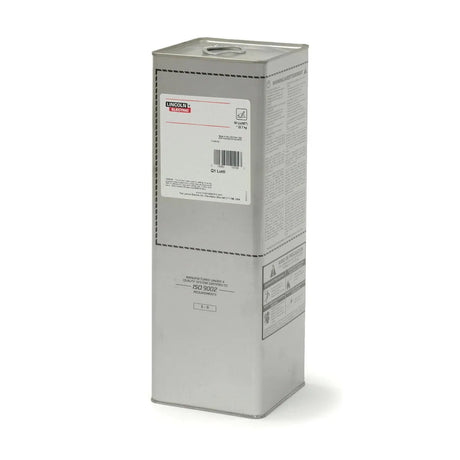
Lincoln Excalibur 11018M MR E11018-M Stick Welding Rod
From $239.76$293.40Unit price /Unavailable

Lincoln Excalibur 385-16 Stick SMAW Welding Rod
From $254.64$281.20Unit price /Unavailable
Lincoln Excalibur 330-16 Stick SMAW Welding Rod
From $292.03$322.88Unit price /Unavailable
← All Stick Electrodes & Welding Rods
Lincoln Excalibur Welding Rods — E7018 H4R Low Hydrogen SMAW Electrodes
Lincoln Excalibur welding rods are the production-grade stick electrode line for fabricators, contractors, and maintenance crews who need consistent arc performance on code-governed joints. Every Excalibur electrode ships in a resealable moisture-resistant easy-open container that holds diffusible hydrogen below H4R without a rod oven on most projects. WeldingMart stocks the full catalog — add to cart and your subtotal updates instantly with no minimum per SKU.
Lincoln Excalibur 7018 MR — Mild Steel Low Hydrogen E7018 H4R
The Lincoln Excalibur 7018 MR is the most widely specified mild steel E7018 stick electrode for North American structural work. It meets AWS A5.1 E7018 H4R — delivering ≤4 mL/100g deposited metal at the tightest classification in the standard. The resealable container limits moisture pickup between shifts so the electrode runs clean out of the can without porosity risk, and H4R-rated deposits are confirmed by independent specification. The stable puddle and smooth arc transfer are clearly readable on out-of-position joints — basically the result of sound coating integrity built into every lot. Extreme bendability and a clear puddle in the finished weld confirm lot-to-lot consistency. The consistent clear puddle and smooth arc character confirm improved coating integrity at every production run. Tensile strength MPa is 490 min; Charpy V-notch impact energy is 27 J at −30°C (20 ft lbs); hardness Rockwell B is 83–90. AWS A5.1 certification makes Excalibur 7018 MR the go-to type for structural steel, pressure piping, and chemical processing structures.
Excalibur 7018 MR Sizes and Package Types
Lincoln Excalibur 7018 MR runs in 3/32 in, 1/8 in, and 5/32 in diameters on AC or DC+. The 50 lb easy-open production container is the standard type for volume fabrication; a 10 lb easy-open 3-pack (8–10 lb) is stocked for shop trials. The 3/32 size suits root passes and light-gauge joints; 1/8 in is the most common structural choice; 5/32 in handles high-amperage fill and cap passes. All carry E7018 H4R, ship from stock, and deliver extreme bendability per specification.
- 3/32 × 14 in, 50 lb easy-open can — E7018 H4R; good for root pass work and starting lighter arc passes. Add to cart.
- 1/8 × 14 in, 50 lb easy-open can — E7018 H4R; most popular 50 lb easy-open order for general structural fabrication. Subtotal shown at cart.
- 5/32 × 14 in, 50 lb easy-open can — E7018 H4R; high-deposition cap passes. Subtotal shown at cart checkout.
- 3/32 and 1/8, 10 lb easy-open 3-pack — good starting quantity before committing to a 50 lb easy-open order. Thanks to the resealable container, partial cans stay dry between shifts with no change to rod condition.
Specialty and Stainless Excalibur Grades
Beyond E7018 H4R carbon steel, the line covers HSLA classes (E8018-C1, E9018M, E10018-D2, E11018M), chrome-moly grades (E8018-B2, E9018-B3), and AWS A5.4 stainless — 308L, 309L, 316L, 2209, and 630-16 for aerospace and oil and gas equipment. Reduced moisture pickup and fewer coating chip defects drive competition reduction versus commodity electrodes — indicating sound coating with confirmed low-moisture pickup. Mn balance in each weld metal type is controlled lot-to-lot; every product meets or exceeds its applicable AWS filler-metal spec.
When to Choose Excalibur Welding Rods
Lincoln Excalibur electrodes are the right call when the welding procedure specification (WPS) demands a certified low-hydrogen deposit and the job environment makes a rod oven impractical. The following situations are where Excalibur 7018 MR consistently outperforms commodity E7018 alternatives:
- Structural steel fabrication under AWS D1.1: Preheat requirements and CVN minimums on A572 Gr. 50 or A36 base metals are satisfied by the E7018 H4R classification. The easy-open hermetic container eliminates moisture re-absorption between shifts — a significant advantage on outdoor erection sites where a rod oven may be unavailable.
- Pressure piping and vessel repair: ASME Sec. IX qualification for low-hydrogen SMAW typically requires ≤8 mL H₂/100g deposit. Excalibur 7018 MR's H4R rating (≤4 mL/100g) gives a comfortable margin. The consistent controlled puddle and smooth arc transfer in vertical-up and overhead positions simplifies welder qualification testing.
- Field maintenance and shutdown work: When an outage window limits the time available to condition rods, Excalibur's 9-hour out-of-oven exposure allowance per AWS D1.1 Annex I saves scheduling headaches. Crews can pull from a resealable easy-open can throughout a shift without a separate rebake cycle.
- Multi-pass welds on thick sections: The 5/32 in diameter at high amperage makes fill and cap passes on sections over 1 in thick efficient without sacrificing the tight diffusible hydrogen control required to prevent underbead cracking.
- High-alloy and HSLA base metals: E8018-C1, E9018M, and the chrome-moly grades in the Excalibur line extend the low-hydrogen benefit to quench-and-tempered and Cr-Mo steels where hydrogen-induced cracking risk is highest.
Excalibur vs Other Lincoln Stick Electrodes
Understanding where Excalibur fits in Lincoln's broader SMAW catalog helps you select the right electrode without over- or under-specifying:
- Excalibur 7018 MR vs Jetweld LH-70 (E7018): Both are E7018 H4R, but Excalibur ships in the moisture-resistant easy-open container that maintains H4R compliance without a rod oven. Jetweld is a solid performer but requires standard hermetic tin packaging and more aggressive out-of-oven time management.
- Excalibur 7018 MR vs Excalibur 8018-C1: If base metal is quench-and-tempered low-alloy steel (A514, HY-80), step up to E8018-C1 for the higher 80 ksi tensile class. The MR container benefit applies across the full Excalibur family.
- Excalibur 7018 MR vs E6013 (general-purpose): E6013 is a rutile-coated electrode with no low-hydrogen requirement — suitable for light fabrication and sheet metal. For code-governed structural, pressure, or HSLA work, the E7018 H4R classification of Excalibur is mandatory.
- Excalibur 308L/309L vs E308L-16 commodity rods: The Excalibur stainless grades carry the same AWS A5.4 certifications at tighter lot chemistry control. Competition reduction compared to unbranded stainless electrodes is measurable in fewer rejected weld metal test coupons per lot.
Storage and Re-baking — Excalibur E7018 H4R
The Excalibur MR container is engineered to maintain H4R compliance for 9 hours after opening in ambient conditions up to 80% relative humidity, per AWS D1.1 Annex I. To preserve that compliance:
- Keep the can sealed until ready to weld; do not open multiple cans simultaneously.
- If rods have been exposed beyond 9 hours or show any sign of surface moisture, re-bake at 500–800°F (260–427°C) for 1–2 hours per Lincoln Electric's published recalcination procedure before use.
- Never stack re-baked rods deeper than 3 in in the oven to allow even heat penetration.
- After re-baking, store in a holding oven at 250–300°F (120–150°C). Log the date and batch number — confirmatory test records support your weld quality documentation.
- Electrodes showing visible rust on the flux coating or bare wire must be discarded; no re-bake restores moisture-damaged flux to H4R compliance.
Safety and PPE Requirements — Excalibur SMAW
California Prop 65: Cancer and reproductive harm warning applies. Consult the Safety Data Sheet (SDS) before use. For Excalibur SMAW operations, the following PPE is required:
- ANSI-compliant welding helmet, minimum shade 10 lens for E7018 at standard structural amperage ranges.
- Leather welding gloves and flame-resistant (FR) jacket or sleeves — spatter risk from high-amperage 5/32 in passes is significant.
- Local exhaust ventilation (LEV) or approved respiratory protection when welding in confined spaces or on coated/galvanized base metals.
- Review the Lincoln Electric Excalibur SDS for Mn and Cr exposure limits applicable to stainless and HSLA grades.
Why Buy Excalibur Rods From WeldingMart
- 130+ SKUs in stock: Good selection across carbon steel, stainless, and HSLA. No substitutions. Fast order fulfillment; subtotal shown at cart checkout.
- MR resealable packaging: The resealable easy-open container limits moisture and maintains rod quality, extending out-of-oven exposure to 9+ hours per AWS D1.1 Annex I. Fewer rod-oven shifts, less waste.
- Authorized Lincoln Electric affiliates: Genuine product with current pricing updates and rights to run these rods on Lincoln-specified WPS jobs.
- Email support: Questions about E7018 H4R, arc behavior, or electrode selection — email our team. We use the same equipment and run the same electrodes.
Related Collections
Shop compatible Lincoln stick welding equipment at Lincoln Stick Welders. Browse all stick electrode grades at the Stick Welding Electrodes & Rods hub.











