
E7018 is the workhorse low-hydrogen stick electrode for code-quality welds on mild and low-alloy structural steel — bridges, pressure vessels, heavy fabrication, and any procedure that calls for low-hydrogen filler. Its iron-powder, low-hydrogen flux system keeps diffusible hydrogen below 8 ml/100g of deposited weld, dramatically reducing the risk of hydrogen-assisted cracking on restrained joints and higher-carbon base metals. Available from Lincoln Electric (Excalibur 7018, Excalibur 7018 MR) and Harris in 1/16" through 1/4" diameters, sealed cans, and resealable hermetic packaging.
-


Lincoln Excalibur 7018-A1 MR Stick SMAW Welding Rod
From $187.62$222.00Unit price /Unavailable
Lincoln E7018 H4R (IronArc 7018 MR x 14 SMAW Welding Rod)
From $145.25$174.60Unit price /Unavailable

Lincoln Excalibur 7018 MR Stick SMAW Welding Rod
From $167.40$204.90Unit price /Unavailable
Lincoln IronArc 7018-1 MR Stick SMAW Welding Rod
From $153.36$187.50Unit price /Unavailable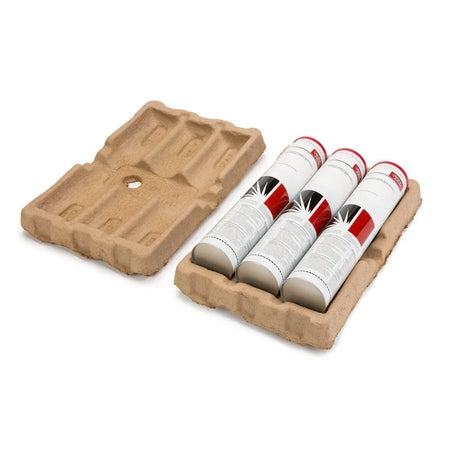
Lincoln Excalibur 7018 XMR 3/32 x 14 in SMAW Welding Rod
From $188.25$226.50Unit price /Unavailable
Lincoln Excalibur 7018-1 MR 3/32 x 14 in SMAW Welding Rod
From $156.96$192.24Unit price /Unavailable

The E7018 is the workhorse low-hydrogen electrode for structural steel. If your job calls for code-quality welds on mild or low-alloy steel — bridges, pressure vessels, structural fabrication, heavy equipment — the 7018 is almost certainly the rod your welding procedure specifies. The low-hydrogen flux system keeps diffusible hydrogen below 8 ml/100g of deposited metal, dramatically reducing the risk of hydrogen-assisted cracking on restrained joints and higher-carbon base metals. When a procedure says "low-hydrogen required," it means 7018 or equivalent.
What Does 7018 Mean? AWS Classification Decoded
The E7018 designation under AWS A5.1 breaks down into four parts:
- E — Electrode (covered SMAW stick electrode)
- 70 — Minimum tensile strength of 70,000 psi (483 MPa) in the deposited weld metal
- 1 — All-position usability (flat, horizontal, vertical, overhead). A "2" in this slot would indicate flat and horizontal only.
- 8 — Flux type and current: low-hydrogen iron-powder coating, usable on DC+ (DCEP) and AC
The trailing letter codes you see on premium products — H4, H8, H16 — designate the maximum diffusible hydrogen content in milliliters per 100 grams of deposited weld metal. H4 (4 ml/100g) is the lowest and is specified for the most crack-sensitive applications: thick sections of high-strength steel, restrained joints, and offshore or nuclear code work. H8 is the standard 7018 specification. MR (Moisture-Resistant) and XMR designators on Lincoln Excalibur products extend the out-of-oven exposure window under AWS D1.1 Annex I conditions.
Choosing a 7018 rod for your job
- Amperage range: 70–110 A for 3/32 in; 100–150 A for 1/8 in; 130–190 A for 5/32 in; 200–275 A for 7/32 in. Larger diameters run hotter for thick plate and high-deposition flat passes.
- Polarity: DC+ (DCEP) is standard; most 7018 electrodes also run on AC, making them compatible with transformer-style machines commonly found on job sites and in smaller shops.
- Joint position: All-position — flat, horizontal, vertical-up, and overhead. Vertical-down is not recommended; the slag system is designed for upward progression only.
- Base metal: A36, A572, A516, A514 (preheat required on higher-carbon grades), and other structural mild and low-alloy steels. Minimum deposit yield strength is 60,000 psi; tensile minimum is 70,000 psi.
- Typical applications: Structural steel erection, pressure vessel fabrication, heavy equipment repair, shipbuilding, and any application governed by AWS D1.1 Structural Welding Code or ASME Section IX.
7018 vs 6011 vs 6013: Which Stick Rod Should You Use?
The three most common SMAW electrodes for mild steel each serve a different purpose. Choosing wrong wastes time and material — or worse, produces welds that don't meet code.
- E6010 / E6011 — Fast-freeze cellulose-coated electrodes. Deep penetration, aggressive arc, runs on AC (6011) or DC (6010). Best for root passes on pipe, dirty/rusty/painted steel, and field repair where joint prep is impractical. Higher hydrogen content limits use on critical structural joints.
- E6013 — Rutile-coated general-purpose electrode. Soft arc, easy to strike and restart, low spatter, excellent bead appearance. Best for thin-gauge sheet metal, light fabrication, hobby work, and applications where appearance matters more than penetration. Not low-hydrogen, not specified by structural codes.
- E7018 — Low-hydrogen iron-powder-coated electrode. Smooth arc, low spatter, dense slag that releases easily. Required for code-quality work on structural steel, pressure vessels, and any restrained or high-restraint joint. Must be kept dry — 7018 absorbs moisture quickly and re-introduced moisture defeats the low-hydrogen designation.
For most shop fabrication and structural work, 7018 is the default. Use 6010/6011 only for root passes or field repair where 7018 penetration is insufficient. Reach for 6013 only on light, non-critical sheet metal work. The full AWS digit system across all SMAW electrodes is decoded in the AWS classification guide.
Typical Mechanical Properties and Chemistry (As Welded)
E7018 weld metal deposited from covered electrodes typically meets or exceeds these values:
- Tensile strength: 70,000–85,000 psi (483–586 MPa) — AWS minimum 70,000 psi
- Yield strength: 58,000–72,000 psi (400–496 MPa) — AWS minimum 58,000 psi
- Elongation in 2 in: 22–30% — AWS minimum 22%
- Charpy V-notch impact: 20 ft-lb at -20°F (27 J at -29°C) minimum
- Diffusible hydrogen: H4, H8, or H16 ml/100g — see the H-designator on the product label
- Typical chemistry (weld deposit): 0.08% max C, 0.30–1.60% Mn, 0.75% max Si, low S/P
These values conform to ANSI/AWS A5.1 / ASME SFA 5.1 specifications for E7018 covered electrodes. The Charpy impact requirement is what makes 7018 acceptable for low-temperature service and dynamic-load applications where brittle fracture is a concern.
What's in this collection
This collection holds 39 active SKUs of Lincoln Electric 7018 electrodes, spanning diameters from 3/32 in through 7/32 in and package sizes from 3-pack 8 lb easy-open cans up to 50 lb production cans. Representative products include the Lincoln ED032877 Excalibur 7018 A1 MR in 5/32 x 14 in (50 lb can) — a moisture-resistant variant engineered for demanding structural applications — and the Lincoln ED037425 Excalibur 7018 XMR in 3/32 x 14 in, which delivers the tightest moisture-resistance specifications in the Excalibur lineup for the most critical low-hydrogen applications. All products are sourced directly from Lincoln Electric as an authorized distributor.
For a broader view of everything WeldingMart carries in the SMAW category, visit the stick welding electrodes hub. If your application demands higher tensile strength — quenched-and-tempered steels or chrome-moly pressure piping — the 8018 high-strength low-alloy rods are the next step up in the strength ladder. For high-deposition pipe welding under AWS D1.1, see the pipeliner electrodes collection.
Storage, Rod Ovens, and Reconditioning
Low-hydrogen electrodes are extraordinarily sensitive to moisture. Once removed from their hermetically sealed can, 7018 electrodes begin absorbing atmospheric moisture, which dissociates into atomic hydrogen during welding and diffuses into the weld metal — directly defeating the low-hydrogen specification. Standard practice:
- Open and store at 250–300°F in a rod oven immediately after breaking the seal on a can.
- Exposure limit: Standard 7018 should not exceed 4 hours of ambient exposure before reconditioning per AWS D1.1 Annex I. MR-rated electrodes extend this to 9 hours; XMR extends it further.
- Reconditioning: Bake at 700–800°F for one hour to drive off absorbed moisture. Do not exceed 800°F — overheating damages the flux binder.
- Rejection criteria: Electrodes with damaged, cracked, or peeling flux must be discarded — they cannot be reconditioned to specification.
For job-site work, a portable rod oven is mandatory for any code-quality 7018 application. Field exposure of an unprotected can in humid conditions can render the contents non-conforming within hours.





